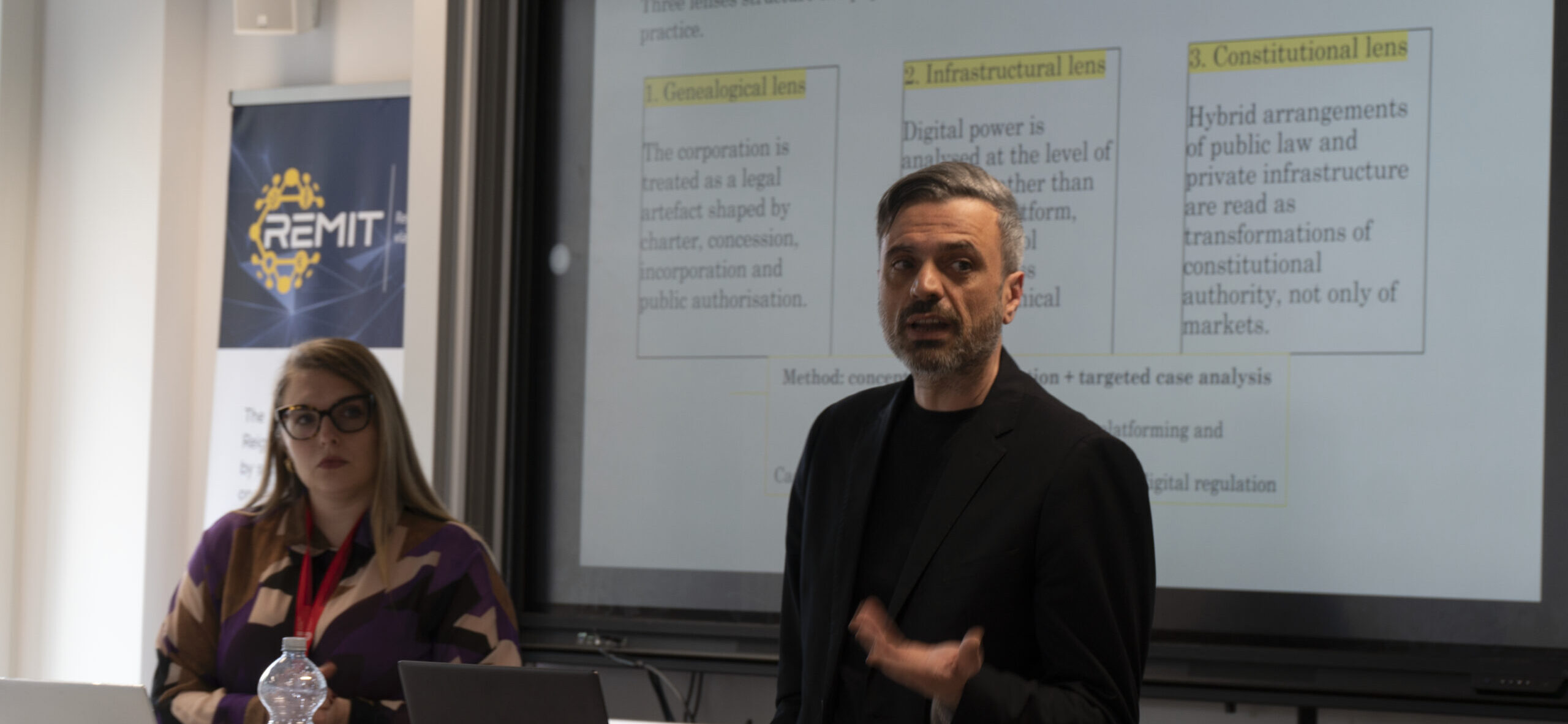
On 26 and 27 March 2026, PGMT member Dr. Dennis Redeker (ZeMKI) jointly with Dr. Berenike Prem (InIIS, University of Bremen), in cooperation with the International Relations Section of the German Political Science Association (DVPW), hosted the workshop”International Relations in the Digital Age: Governing – and Being Governed by – Technology” (see Call for Papers here). The event brought together more than 40 scholars from across Europe and beyond to exchange ideas and discuss ongoing research.
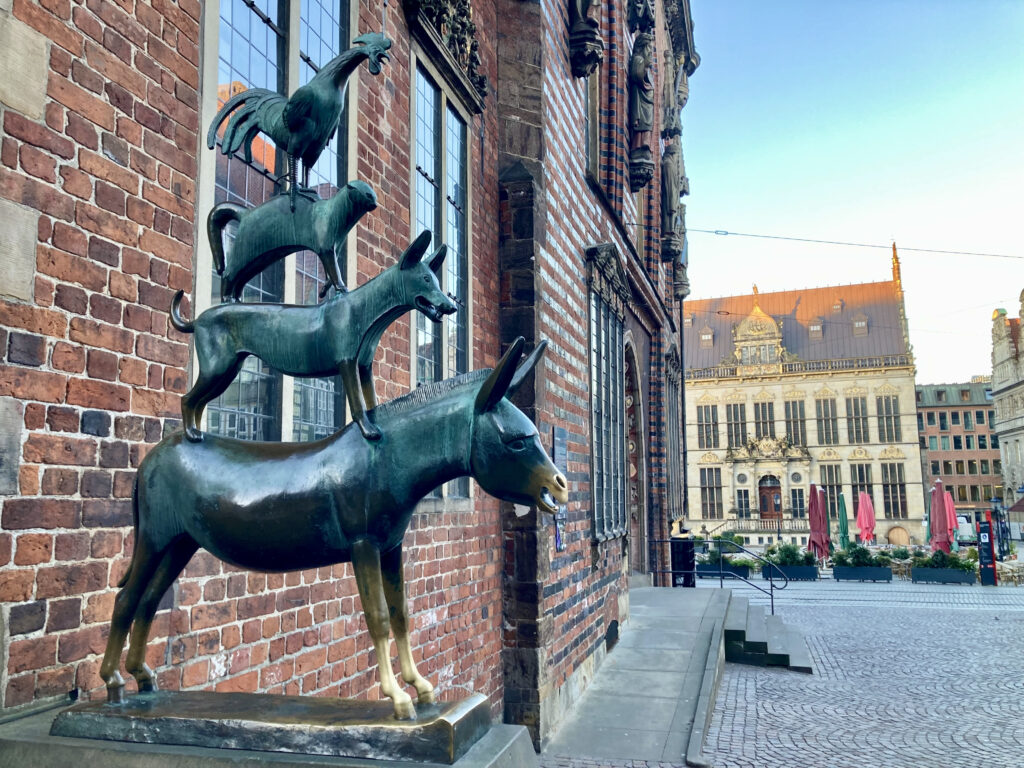
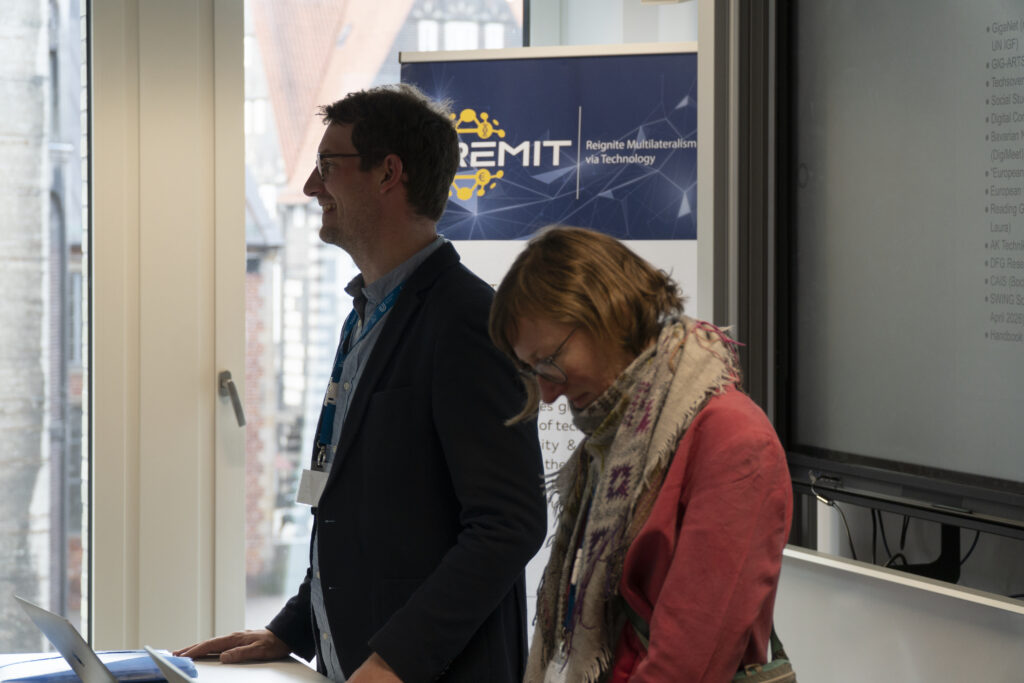
By bringing together interdisciplinary approaches to the study of digital international relations, science and technology studies (STS), and digital governance studies, the workshop sought to develop a multi-layered understanding of how technologies both shape and are shaped by domestic, international, and transnational political processes, as well as (by) underlying power structures and normative frameworks. The eight panels at the Domshof inner-city location of the University of Bremen and a public keynote lecture at the Haus der Wissenschaft illustrated the breath of topics and approaches, for which both international politics/IR and the governance of the digital are a common denominator.
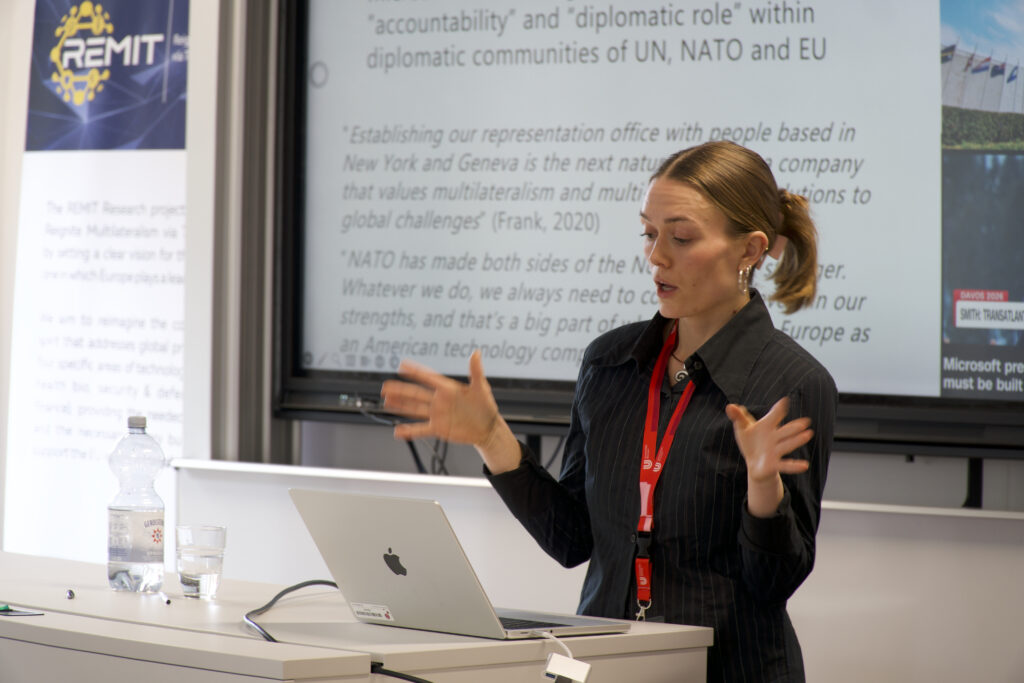
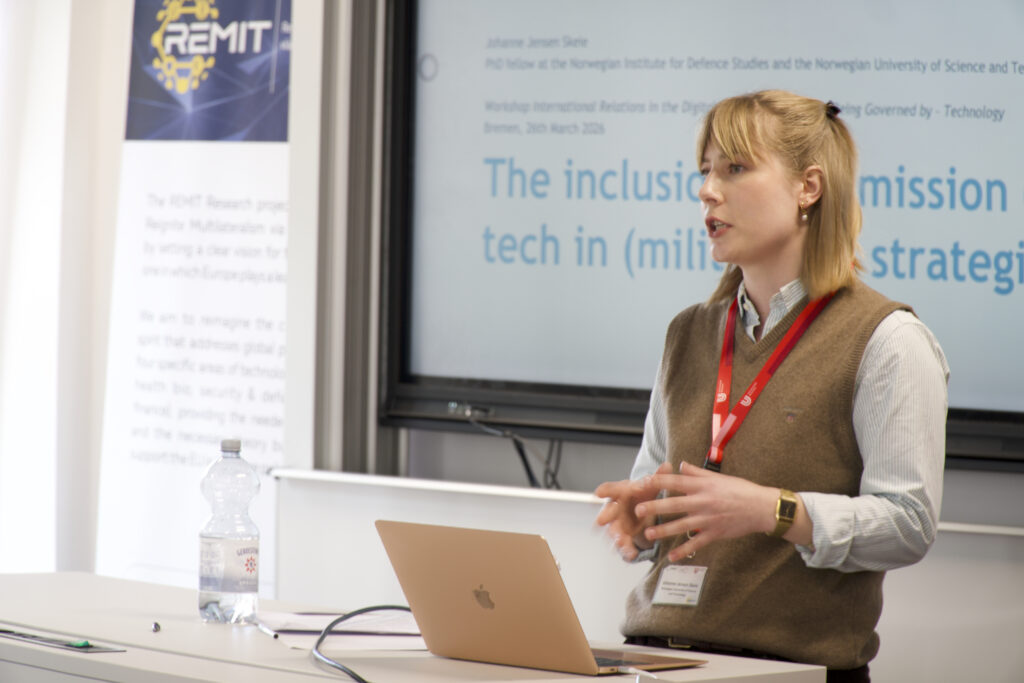
The workshop opened on Thursday with parallel panels on cybersecurity and digital sovereignty. All sessions provided participants with the opportunity to present ongoing research projects and early-stage papers, and to engage in in-depth discussion and constructive feedback. The program continued with two parallel panels, one examining the interrelationship of technology governance with perceptions, norms, and the construction of digital objects, and another focusing on questions of AI governance.
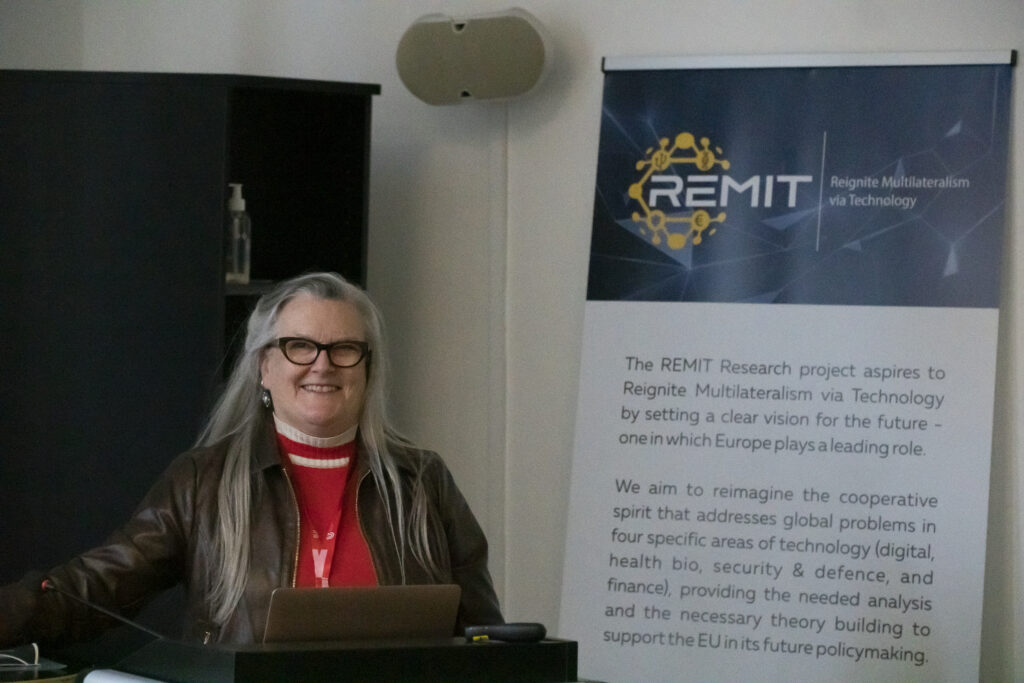
The first day concluded with a public keynote lecture by Professor Marianne Franklin (Rijksuniversiteit Groningen), who offered critical reflections on the challenges and opportunities associated with governing digital technologies in an evolving global political landscape, elaborating on how competing futures are imagined and developed – both technologically and societally – often with too little attention paid to environmental impacts of the digital transformation. This public lecture was organized through the project Reignite Multilateralism via Technology (REMIT). The project is funded by the European Union’s Horizon Europe Research and Innovation Programme under grant agreement No 101094228.
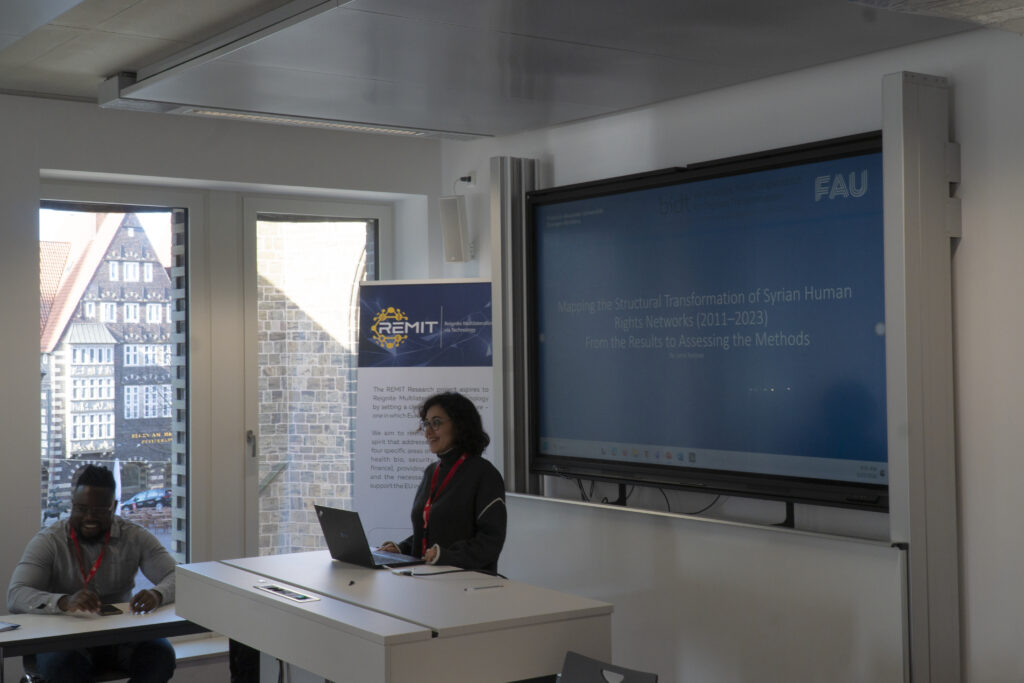
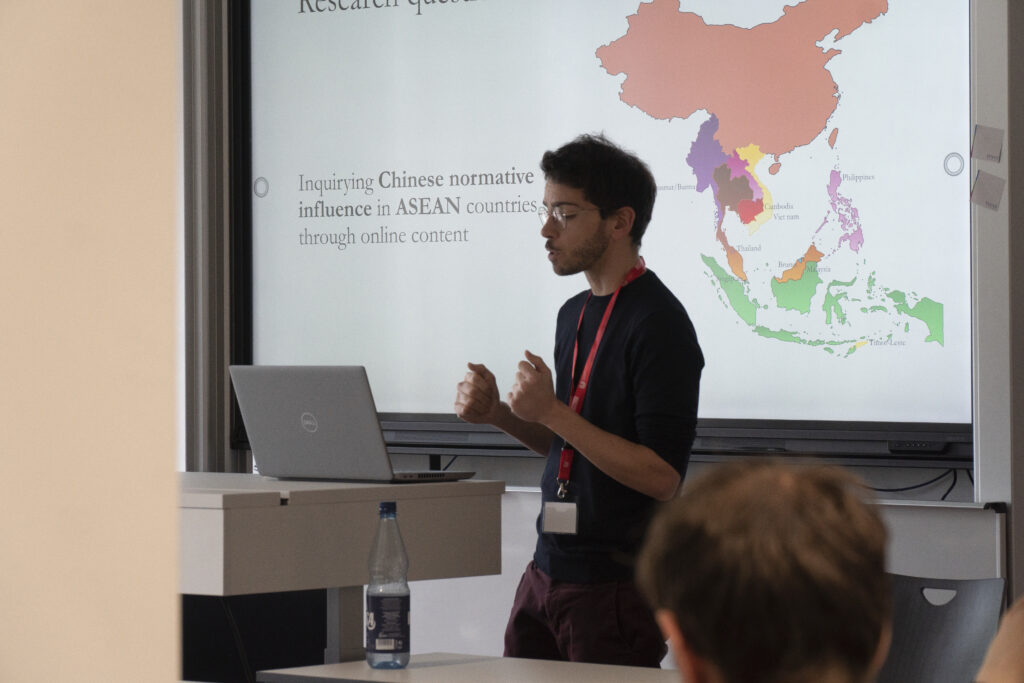
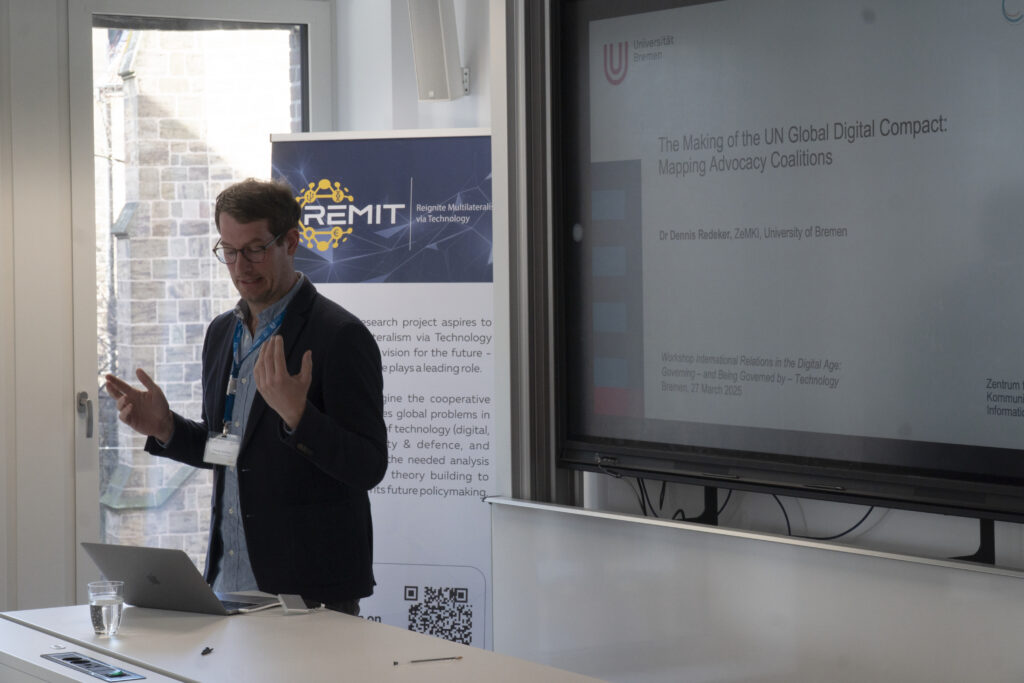
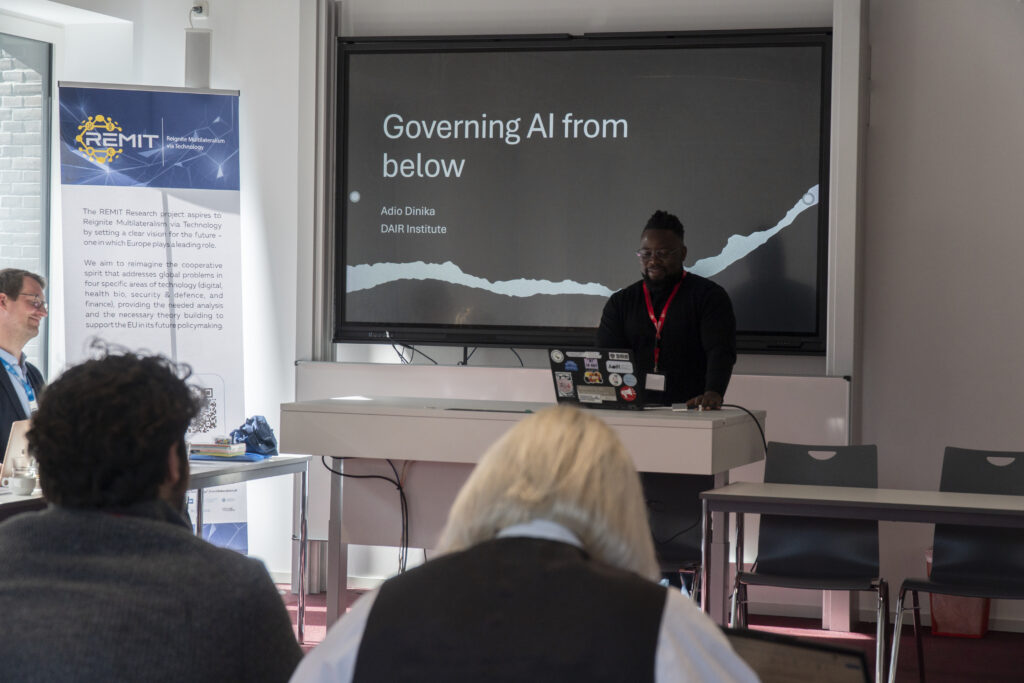
On Friday, the workshop featured four additional panels addressing a broad range of topics, including the relationship between military affairs and artificial intelligence, the role of digital governance in international organizations and global inequalities, the intersections of technology and global environmental politics, and the growing influence of technology companies. The workshop closed with a joint discussion on what has been learned, possible future collaborations and sharing insights and conclusions concerning the study of International Relations in the digital age.
The full program can be viewed below.
Dennis and Berenike would like to thank all participants for their collegial engagement and for sharing valuable insights into their respective fields and research. Additionally, they would like to thank Nikolas Pfannenschmidt and Cedric Bührke for their excellent preparation and logistical support of the workshop.
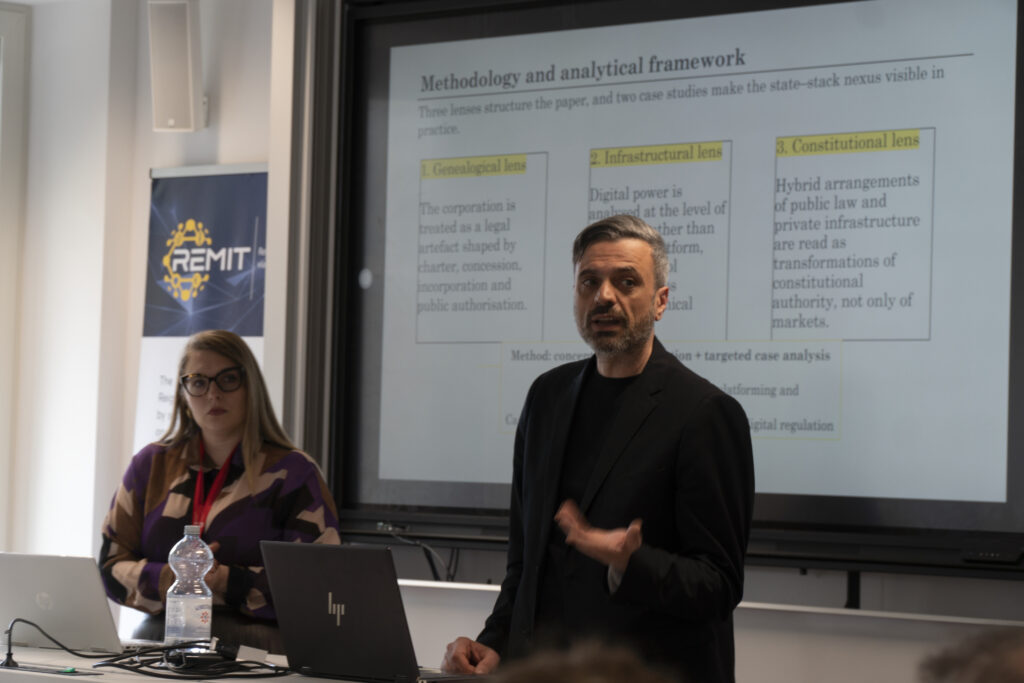
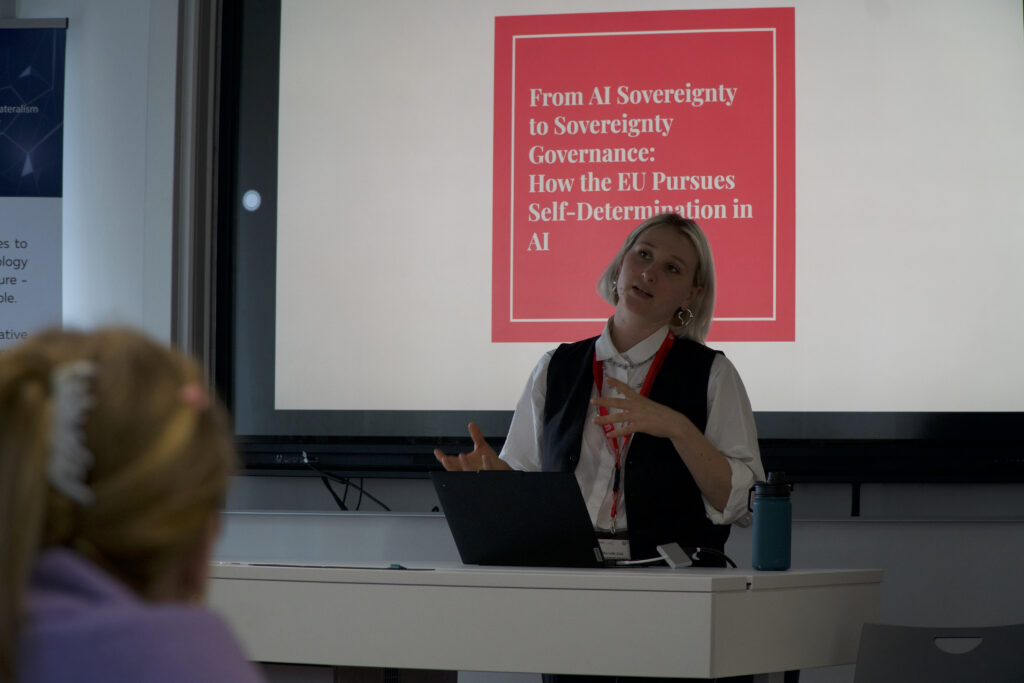
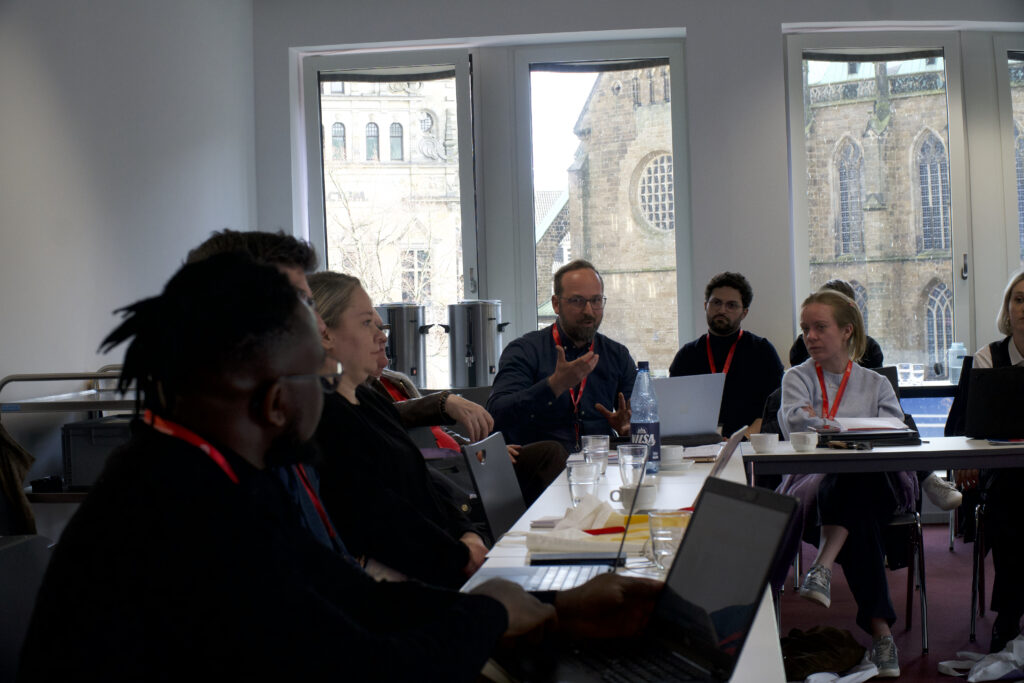
The organizers are also grateful to the REMIT project for supporting and hosting the public keynote lecture as well as the Bremen International Graduate School of Social Sciences (BIGSSS) and the Stiftung Bremer Wertpapierbörse for their generous financial support for early-career researchers requiring travel support. Additionally, the World International Studies Committee (WISC) and the Digital Constitutionalism Network cooperated to bring together such a diverse and inspiring group of scholars, thereby contributing to two highly engaging and insightful workshop days.